
For planners
Planning that keeps up
with changes.
You already know how to plan. What you do not have is a tool that keeps up with you — one where changing an assumption does not mean rebuilding four tabs and re‑checking every formula by hand.
What changes day to day
The specific things that stop happening.
What Monday looks like now
- Export last week’s interaction data, paste it into the model, fix the columns that moved.
- Rebuild the roster around the four people who changed their availability on Friday.
- Email it round, then field the replies for two days.
- Find out on Thursday that Tuesday was short‑staffed.
What Monday looks like with Hive65
- Last week’s data is already in. The forecast has already run.
- Availability changes are in the roster before you open it.
- Publish once. Every employee sees it in the same second.
- Under‑coverage shows up on the plan, not in Thursday’s report.
Try a change before you commit to it
Scenarios sit side by side, so you can argue with a number instead of a feeling.
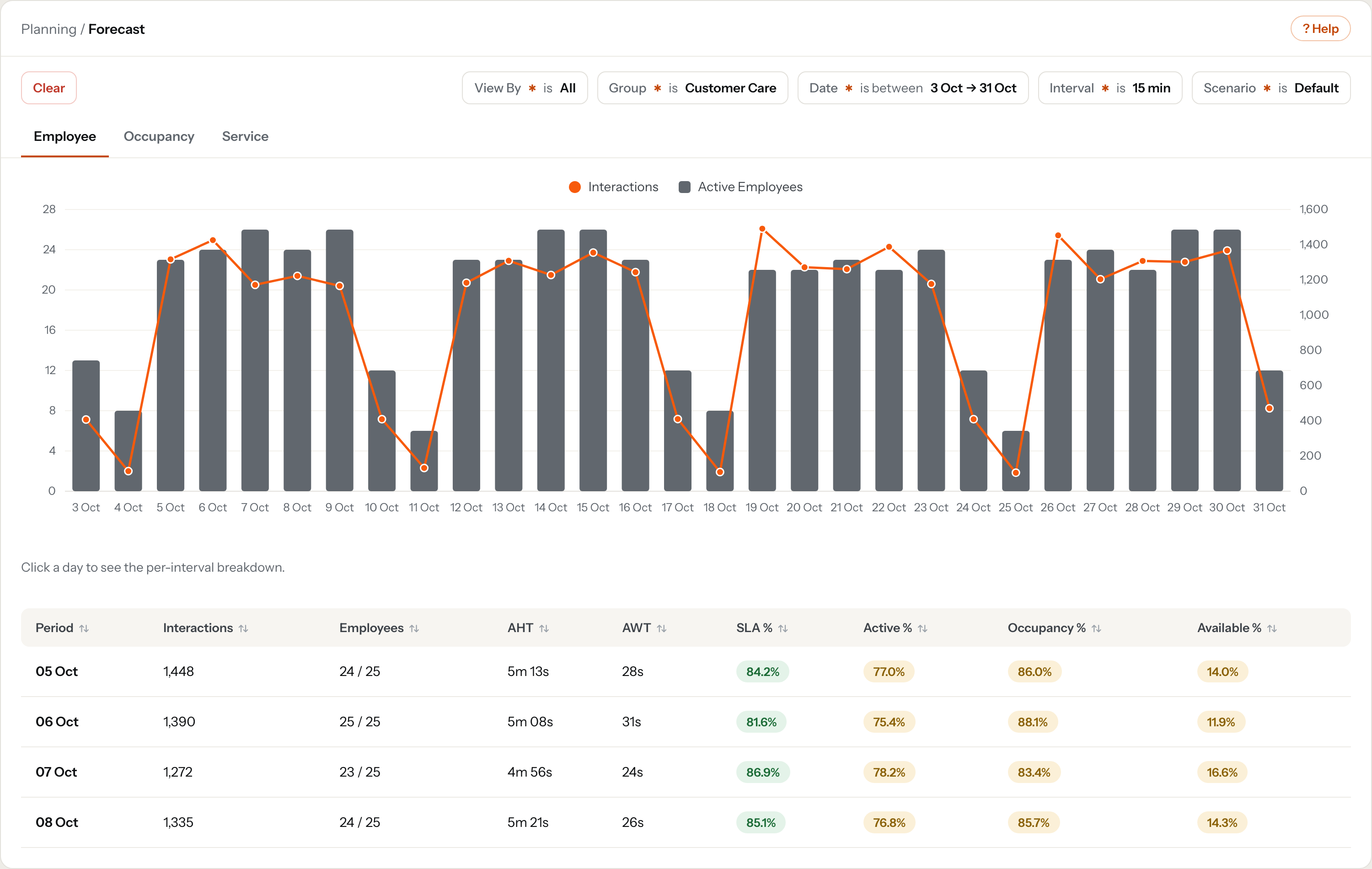
Scenario planning
Change volume, AHT, shrinkage or service level and keep both versions. Nothing is overwritten.
Coverage before you publish
Every interval shows required against scheduled, so a gap is something you fix rather than something you discover.
Forecast accuracy, tracked
What you predicted against what arrived, so the model earns its trust over time instead of asking for it.
We work out the numbers you do not have
Handling time and volume change are derived from your own history. Supply them if you want to override; leave them alone and they stay current on their own.

Try it on next week’s roster
It is free, it is uncapped, and setting up the connection takes a conversation with us rather than an implementation project.